Home » Ramadan Cultural Insights: Aligning with the Kingdom’s Business Rhythm
Ramadan holds a central place in the Kingdom of Saudi Arabia. It is a month of devotion, reflection and discipline, and at the same time a period that reinforces generosity, solidarity and collective identity. Across the country, public life, family life and professional engagement evolve within a shared atmosphere shaped by spiritual focus and social cohesion.
During this month, daily rhythms follow a distinctive cadence. The fast structures the day. Iftar gathers families, colleagues and partners at sunset. Evening prayers extend activity into the night. Conversations unfold later. Meetings adjust accordingly. Time is reorganised in harmony with a collective rhythm that brings people together.
For businesses operating in or engaging with Saudi Arabia, Ramadan represents an important moment of alignment. Adapting to this rhythm reflects attentiveness and respect. Understanding cultural codes supports professional effectiveness and strengthens long term partnership. In the Saudi business environment, relationships form the foundation of sustainable cooperation. Cultural awareness enhances engagement and reinforces institutional connection.
In addition, working hours in both the public and private sectors are reduced in accordance with Saudi labour regulations, and peak activity frequently shifts to the evening. Retail, hospitality and consumer facing sectors often record increased demand after sunset, particularly in the final ten days leading to Eid al Fitr. Decision making processes may also follow a more relationship centred tempo during this period. For international companies, anticipating these operational adjustments supports smoother coordination and more effective scheduling.
Through the Ramadan Cultural Insight Series, ECCKSA has dedicated four highlights to four themes that illuminate how life and business take shape across the Kingdom during this month: Saudi coffee, the role of the majlis, Ramadan nights and business rhythms, and solidarity and corporate responsibility. Together, these themes reflect the relational framework that guides engagement in Saudi Arabia.
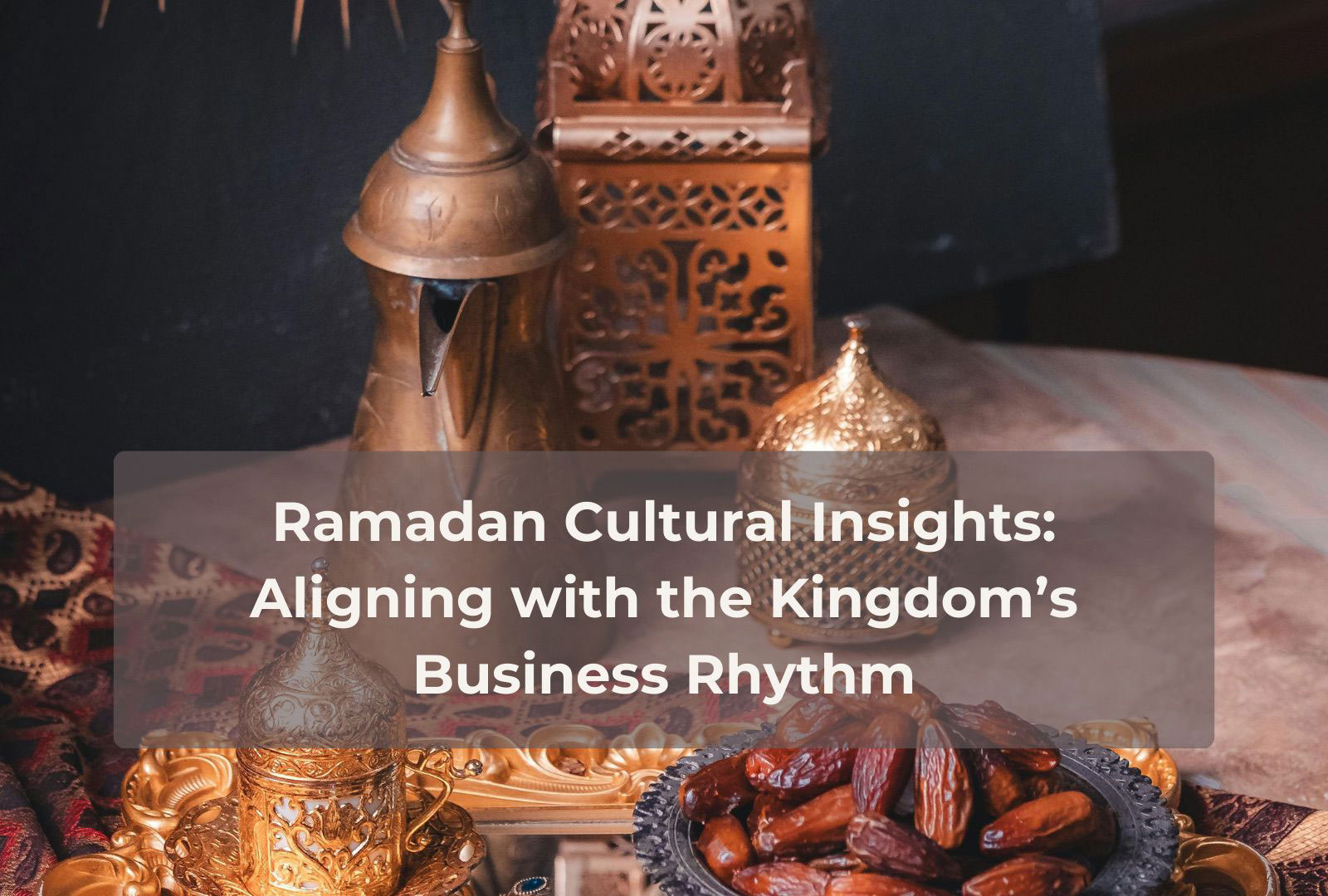
Saudi coffee holds a distinctive place in the cultural heritage of the Kingdom. From ancient trade routes and caravan journeys to modern homes and institutions, it has long symbolised hospitality, generosity and honour. Its warm, spiced aroma often marks the first gesture of welcome, reflecting a tradition deeply rooted in Saudi identity. In 2015, Arabic coffee was inscribed on the Representative List of the Intangible Cultural Heritage of Humanity by UNESCO, recognising its enduring social significance.
The preparation and serving of coffee follow refined customs. The dallah, with its elegant curved spout, has become an emblem of reception. Service begins with the most senior guest. The cup is offered with the right hand and filled lightly, traditionally to no more than one third. The server stands attentively, maintaining composure and respect. Each gesture conveys recognition and consideration.
Often described as a conversation without words, the ritual of pouring coffee establishes mutual acknowledgement before dialogue advances. In professional settings, this moment frames engagement within a culture that values relationships and thoughtful conduct. The cup of coffee becomes the first expression of partnership.
In practical business terms, allowing time for this initial exchange is important. Meetings commonly begin with hospitality before formal agenda points are addressed. Moving too quickly into contractual discussion may be perceived as abrupt. Observing this protocol signals cultural awareness and reinforces trust at the outset of professional interaction.
In Saudi Arabia, some of the most meaningful conversations begin in the majlis. Traditionally a reception space within a home or institution, the majlis is more than a room. It is a setting where gathering, listening and exchange take place within a framework of courtesy and mutual respect. Presence carries weight. Participation reflects recognition.
The majlis occupies a space between the formal and the informal. It brings together leaders, guests, family members and visitors in an environment that encourages dialogue before decision. Time is given to conversation. Stories are shared. Listening holds equal importance to speaking. Hierarchy may be visible, yet interaction remains fluid and measured. Influence develops progressively and alignment matures through exchange.
During Ramadan, the majlis gains additional resonance. Evening gatherings become focal moments of engagement. Hospitality frames discussion. Ideas unfold at a deliberate pace, allowing understanding to deepen naturally. In many cases, conversations held in the majlis form the foundation upon which future agreements are later structured.
For businesses, this means that relationship building is not separate from negotiation but integral to it. Decisions may require several encounters, and informal dialogue can play a decisive role in shaping formal outcomes. Patience, consistency of presence and continuity of engagement are therefore strategic assets in the Saudi context.
Ramadan reshapes the organisation of time across the Kingdom. The fast structures the daylight hours, while iftar at sunset and evening prayers extend activity into the night. Social, institutional and professional life aligns with this shared cadence. The rhythm of engagement evolves in harmony with a collective experience.
Evenings become central to meetings, networking and dialogue. Institutions and companies host iftar gatherings that create an atmosphere of hospitality and mutual respect. These moments combine reflection with exchange, reinforcing professional relationships within a context shaped by shared values and attentiveness.
Professional commitment remains constant, yet its expression adapts to the tempo of the month. Timing follows the cadence of Ramadan. Understanding this rhythm allows organisations to engage thoughtfully, strengthen partnerships and contribute meaningfully within the Saudi business environment.
From an operational perspective, flexibility in scheduling, advance confirmation of appointments and sensitivity to fasting hours are key. Corporate visibility may also increase during Ramadan through hosted iftar events, sponsorship of community initiatives or participation in charitable campaigns. Rather than representing a slowdown, the month often constitutes a reorganisation of professional energy, with strategic interactions concentrated after sunset.
“Ramadan refocuses thoughts and behaviours on relational over transactional priorities, genuine friendship over business benefit, and community focused charity over commercial interests.”
This reflection by Christopher H. Johnson, Managing Partner at Al-Sharif Law, member of the ECCKSA, captures the ethos that shapes the Kingdom throughout the month. Ramadan brings solidarity and accountability into sharper focus, reinforcing values that resonate across society and within the professional sphere.
Charitable responsibility in Saudi Arabia is structured through the institution of zakat. Zakat al mal constitutes an annual obligation assessed on qualifying wealth and assets, commonly calculated at 2.5 percent. It forms part of a recognised financial and regulatory framework and applies to individuals and, within defined parameters, corporate entities. Although it may be settled at different times of the year, many choose to fulfil it during Ramadan.
Zakat al Fitr, by contrast, is directly linked to the month of Ramadan. It is given on behalf of each individual and reflects a communal act of inclusion and shared responsibility, ensuring that all members of society may participate in the spirit of the month.
Within the Saudi context, these principles extend into the corporate environment. Companies with Saudi or GCC ownership contribute under an established zakat framework, while non Saudi interests are subject to corporate income taxation. Spiritual values and fiscal governance operate within a coherent system. Responsibility therefore forms an integral dimension of business culture, reinforced by Saudi Vision 2030 and reflected in structured corporate participation in social development.
During Ramadan, many organisations intensify corporate social responsibility initiatives, support food distribution programmes or engage employees in volunteer activities. Such engagement strengthens stakeholder trust, enhances institutional reputation and aligns corporate practice with national development priorities. In this context, social contribution is not peripheral to business strategy but closely connected to long term positioning within the Kingdom.
Ramadan in Saudi Arabia is therefore both a spiritual observance and a structural framework influencing time management, hospitality, decision making and corporate responsibility. Cultural understanding during this month does not merely reflect respect. It enhances operational effectiveness, strengthens dialogue and supports sustainable, long term partnership within the Saudi business environment.
Figure: Invest Saudi Renewable Energy Brochure (MISA, 2024)


Membership
Committees
Events
News & Media
Publications
Other
About Us
Membership
Committees
Events
News & Media
Publications
Other
© 2026 European Chamber of Commerce in the Kingdom of Saudi Arabia (ECCKSA). All rights reserved. | V – 4.9